
Quick Summary:
- Buyers in Costa del Sol are now prioritising community and lifestyle over property size and luxury features
- The key decision factor has shifted to how an area feels and functions year-round, not just in summer
- Walkability, cafés, services, and winter activity are becoming essential buying criteria
- Isolated luxury properties are taking longer to sell unless they offer a complete lifestyle ecosystem
- Estepona, Marbella, and Benahavís continue to perform strongly due to established year-round communities
- Choosing the right neighbourhood is now seen as more important than choosing the property itself
Costa del Sol Property in 2026: Why Buyers Are Choosing Community Over Luxury Homes
There’s a clear shift happening in the Costa del Sol property market, and anyone working in it daily will tell you the same thing.
Buyers aren’t leading with property size anymore.
They’re leading with one question:
“What’s it actually like to live there all year round?”
Not in theory. Not in brochures. In reality.
And that question is changing what sells, what sits, and what gets completely ignored in 2026.
Across Estepona, Marbella, Benahavís and the surrounding areas, lifestyle has quietly overtaken specifications. Square metres still matter, but they are no longer the deciding factor.
If anything, they are secondary.
The Real Shift: Buyers Are Buying Communities First, Properties Second
A decade ago, the conversation was simple:
- sea views, size, finish, and location.
Now it’s different.
After a few viewings, most serious buyers start asking questions like:
- Is this area active in winter, or just a summer shell?
- Do people actually live here full-time?
- Can you walk to a café without getting in a car?
- Is there a real community, or just rented holiday turnover?
This is where deals are being made or lost.
Because a beautiful villa that feels isolated stops being attractive very quickly once buyers imagine daily life, not holiday life.
And that’s the key shift in 2026.
People are not buying escape properties anymore. They are buying relocation lives.
Why “Luxury Alone” Is Losing Its Pull
There is a quiet truth in the market that not everyone likes to say out loud:
Some of the most expensive properties are now the hardest to sell.
Not because they are плох properties, but because they are incomplete lifestyles.
A hillside villa with no nearby cafés, no walkable social scene, and no year-round energy might look perfect on paper.
But buyers often walk away after a second visit with the same conclusion:
“We’d still need to drive everywhere.”
And that sentence is becoming a deal-breaker.
Convenience has replaced exclusivity as the real definition of luxury.
What Buyers Actually Want in 2026
Across foreign buyers from the UK, Northern Europe, and beyond, the priorities have become very consistent.
They want:
- Year-round, lived-in communities (not seasonal areas)
- Walkable access to cafés, gyms, and daily essentials
- Reliable healthcare and services within easy reach
- International schools or integration support for families
- Social life that doesn’t depend on peak summer months
British buyers in particular are more intentional now.
Post-Brexit relocation is less emotional and more structured. They are not just chasing sun. They are building a functioning second life.
And that means fewer compromises.
Where the Market Is Quietly Winning (and Where It Isn’t)
You can see the divide very clearly in 2026.
Some areas consistently outperform others, not because of price or prestige, but because of how they are lived in.
Strong-performing areas tend to share:
- Year-round resident population
- Active café and restaurant culture in winter
- Walkability or short driving distances to essentials
- Mixed international and local communities
- Social infrastructure that actually functions beyond tourism
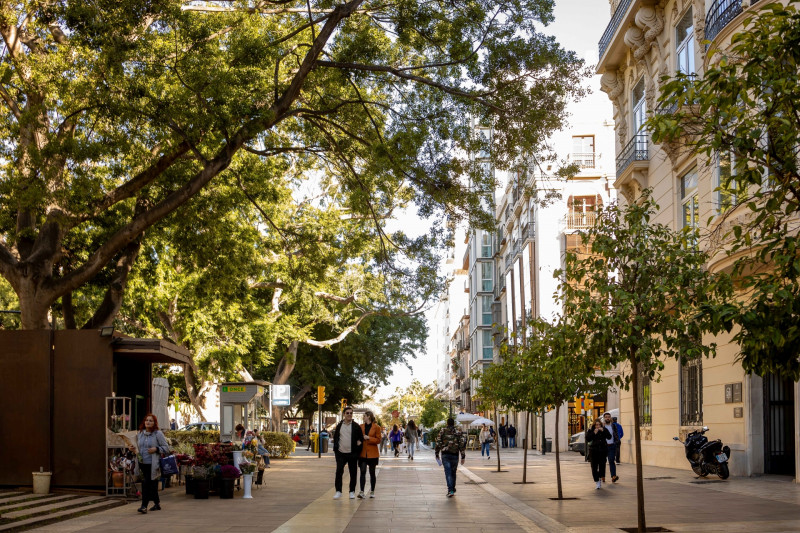
Estepona is a good example of this shift.
It is not trying to be exclusive. It is simply lived in.
And that matters more now than it used to.
Meanwhile, purely luxury-led, isolated developments are taking longer to move unless they offer something beyond architecture and views.
The Buyer Behaviour Shift Agents Are Seeing Daily
From a market perspective, the behaviour change is very clear.
Buyers are now:
- Viewing fewer properties but with more intention
- Taking longer to decide, but moving quickly when they commit
- Rejecting homes earlier based on “lifestyle feel”
- Prioritising neighbourhood over square footage
- Asking deeper questions about winter life, not summer appeal
The old model of “show more listings, close one” is becoming less effective.
Now it is about filtering correctly from the beginning.
Because one wrong area choice can undo everything else.
Why Community Has Become the Real Product
At this point, something important has happened in the market.
The property is no longer the product.
The community is.
The villa, apartment, or townhouse is simply the entry point.
What buyers are actually purchasing is:
- Who they will see every week
- Whether life feels active or empty in January
- Whether they belong somewhere, or just exist there
- Whether daily routines feel easy or fragmented
And this is why experienced local knowledge matters more than ever.
Because you cannot see the community properly in listings.
You only understand it if you live it or work with it every day.
Why Working With the Right Local Agency Matters
In a market this nuanced, property access alone is not enough.
What separates a good purchase from a disappointing one is usually guidance before the viewing stage, not after it.
That’s where Martin Real Estate operates differently.
Instead of pushing listings first, the focus is on understanding how buyers actually want to live, then narrowing down areas that genuinely match that lifestyle.
That includes:
- Honest breakdowns of neighbourhoods (not just price bands)
- Real insight into year-round activity, not seasonal impressions
- Guidance on where community actually functions, not just exists on paper
- Helping buyers avoid isolated properties that look better than they live
The aim is simple: reduce the chance of buying in the wrong place.
Because in Costa del Sol, that is the most expensive mistake.
Before You Look at Properties, Start Here
Most buyers begin the wrong way around.
They start with listings.
But in 2026, that creates confusion more than clarity.
The better approach is to start with the neighbourhood first.
Because once the right area is clear, the property options narrow naturally.
And decisions become faster, not harder.
If you are seriously considering a move or investment in Costa del Sol, the first step is not browsing villas.
It is understanding where life actually works year-round.
Frequently Asked Questions
Is Costa del Sol still a good place to buy property in 2026?
Yes, but the logic has changed. It is now driven more by lifestyle and long-term living than short-term investment or speculation.
Which areas offer the strongest communities?
Estepona, parts of Marbella, and select developments in Benahavís tend to offer the most consistent year-round activity and integration.
Are buyers still focused on luxury properties?
Not in the same way. Luxury still matters, but only when it is supported by real community infrastructure and convenience.
What is the biggest mistake buyers make?
Choosing property based on appearance rather than daily life experience in the area.
Conclusion
The Costa del Sol market in 2026 is no longer defined by property size or architectural design.
It is defined by how a place feels to live in every single day of the year.
And that is why community has quietly become the real currency.
Not views. Not square metres. Not finishes.
Community.
For buyers who understand that shift early, decisions become clearer, safer, and ultimately more satisfying long-term.
And for everyone else, the market usually teaches the lesson the hard way.
If you are considering buying or relocating in Costa del Sol, reach out to Martin Real Estate for honest, on-the-ground guidance and access to areas that genuinely match your long-term lifestyle goals.