


Calahonda offers an appealing combination of Mediterranean beaches, established residential communities and apartments at a variety of price points. Whether you are looking for a permanent home, a holiday apartment or a property with potential rental income, the area provides plenty of choice. However, two apartments with similar asking prices can have very different running costs, legal circumstances and maintenance requirements.
Some Calahonda developments have been established for decades, while others offer newer accommodation and modern facilities. An apartment may look impressive during a viewing, but an attractive kitchen or sea-facing terrace does not tell you whether the community is financially healthy, whether the parking is legally included or whether significant repairs are planned.
This practical checklist explains what to examine before buying an apartment in Calahonda. It covers community finances, legal documentation, building condition, parking, seasonal considerations and the rules affecting holiday rentals. Use it alongside independent legal advice and Martin Real Estate's Costa del Sol Property Viewing Checklist.
If you are beginning your search, explore apartments and other properties for sale in Calahonda to compare the available homes before arranging viewings.
Understanding Calahonda's Apartment Market
Calahonda is part of Mijas Costa, situated between the wider Marbella and Fuengirola markets. Rather than being one uniform residential neighbourhood, it contains numerous developments with different ages, facilities, locations and community arrangements.
Lower coastal developments can appeal to buyers wanting easier access to beaches, restaurants and shops. Communities further inland or uphill may offer open views, quieter surroundings and greater space, although everyday journeys can require a car.
Buildings also differ considerably. Some older apartment blocks offer mature gardens and established communal facilities but may require additional refurbishment. More recently constructed properties can provide contemporary layouts and improved energy efficiency, yet their communal budgets and maintenance responsibilities still deserve careful examination.
Before comparing individual apartments, identify the exact urbanisation and investigate its community of owners. Martin Real Estate's Calahonda community-fees and neighbourhood guide provides additional local background.
1. Check the Community Fees and What They Include
Community fees, known in Spain as cuotas de comunidad, contribute towards the maintenance and management of shared facilities. Depending on the development, these may include gardens, swimming pools, lifts, lighting, security, cleaning, shared insurance and administrative expenses.
Martin Real Estate's published Calahonda guide indicates that community fees can vary substantially between developments, with indicative annual costs for some two-bedroom apartments ranging from approximately €600 to €2,500. Properties within premium communities may cost more.
These are broad guide figures rather than verified charges for the apartment you intend to buy. Always request the property's exact current fee, its payment schedule and a breakdown of what is covered.
Questions to Ask About the Community
- What is the current monthly, quarterly or annual community fee?
- Does it include communal building insurance, security, gardens or pool servicing?
- Have fees increased substantially during recent years?
- Are any exceptional charges or major works under discussion?
- Does the community have substantial unpaid contributions from other owners?
- What balance is held in the reserve fund?
A relatively high fee is not automatically poor value if the services are relevant and well maintained. Equally, a low fee does not necessarily indicate an efficiently managed community. It may reflect fewer facilities or the postponement of important works.
2. Review the Community Accounts Before Buying
A property's community accounts can reveal financial concerns that are not obvious during a viewing. Buyers should ask their lawyer to obtain the latest approved accounts, current budget and recent annual general meeting minutes, ideally covering several years where available.
Look for repeated overspending, unusually large debts owed by owners, an inadequate reserve fund and recurring disagreements about essential maintenance.
Illustrative Example: Assessing a Community Budget
Consider a hypothetical development containing 80 apartments with annual operating expenses of €96,000. This equates to €8,000 in community operating expenditure each month.
Suppose the accounts show a reserve fund of €15,000. That is equivalent to approximately 1.9 months of ordinary expenditure. This does not automatically establish that the community is financially unsound, but it is a reason to investigate upcoming repair obligations and its approach to funding major works.
Under Spain's Horizontal Property Law, the community reserve fund must be at least 10% of its latest ordinary budget. In this illustrative case, that statutory minimum would be €9,600. A community may need considerably more depending on building condition and anticipated expenditure.
Now imagine €12,000 of the €96,000 annual fees remains uncollected. The collection rate would be 87.5% if €84,000 has been paid. Rather than treating this as an automatic pass-or-fail percentage, ask whether the arrears are temporary, concentrated among a small number of owners or part of a persistent problem.
The combination of low reserves and persistent arrears is more concerning than either figure alone.
| Financial Indicator | Illustrative Figure | What to Investigate |
|---|---|---|
| Annual operating budget | €96,000 | Are expenses realistic and controlled? |
| Reserve fund | €15,000 | Is it sufficient for planned works? |
| Fees collected | €84,000 | How are unpaid contributions being recovered? |
| Outstanding contributions | €12,000 | Are arrears recurring or exceptional? |
These figures are a worked example, not the accounts of an identified Calahonda urbanisation.

3. Request the Legal Documents Before Committing
A well-presented apartment still needs thorough legal verification. Your independent Spanish property lawyer should check the relevant records and documentation before you accept binding terms or pay a significant deposit.
Land Registry Information: Nota Simple
A recent nota simple helps identify the registered property, its legal owner and relevant registered mortgages, charges or restrictions.
Ask your lawyer to compare the Land Registry information with the seller's title deed, known as the escritura, and the physical property.
Check Alterations and Planning Records
Pay particular attention to enclosed terraces, converted rooms, added bathrooms or other major changes. An alteration may appear completely integrated into the home while still requiring verification of permissions or documentation.
Your lawyer and technical adviser should consider the property's planning and occupation documentation appropriate to its age and circumstances. Do not assume that every older apartment will have the same documentation as a recently completed development.
Community Debt Certificate
Before completion, request the community-payment certificate and have your lawyer review it. Under the Horizontal Property Law, the purchased property can be legally affected by unpaid community contributions attributable to the current year and the three preceding calendar years, subject to the statutory rules.
The seller is generally required to provide information and certification concerning community debts during the conveyancing process, unless the buyer expressly waives the certification requirement. Do not waive this protection without independent legal advice.
Also ask for recent IBI property-tax and rubbish-charge receipts and confirmation of how utilities will be transferred.
4. Inspect the Building, Not Just the Apartment
Calahonda's coastal environment creates additional reasons to inspect outdoor surfaces, terraces and building structures carefully. Salt-laden air, moisture and routine exposure to the weather can affect metal fittings, external coatings and balconies.
During the viewing, check for staining, rust, water ingress, cracking and deterioration. Pay attention to the condition of communal corridors, staircases, lifts and underground garages.
Physical Inspection Checklist
- Look beneath balcony slabs for cracks, corrosion staining or damaged concrete.
- Check terrace drainage, waterproofing and the condition of railings.
- Inspect ceilings and walls for damp patches, mould or recent cosmetic repairs.
- Test window operation and examine seals around external doors.
- Ask about roof repairs, façade refurbishment and lift servicing.
- Check the age and maintenance records of air-conditioning and hot-water systems.
- Review any available building inspection or technical assessment documentation.
Visible defects are not necessarily evidence of major structural problems. However, significant cracks, corrosion or persistent water ingress should be investigated by an independent qualified technician before proceeding.
If the development has a pool, ask when the filtration system, lining and surrounding surfaces were last refurbished. A major communal repair may lead to additional contributions from owners.
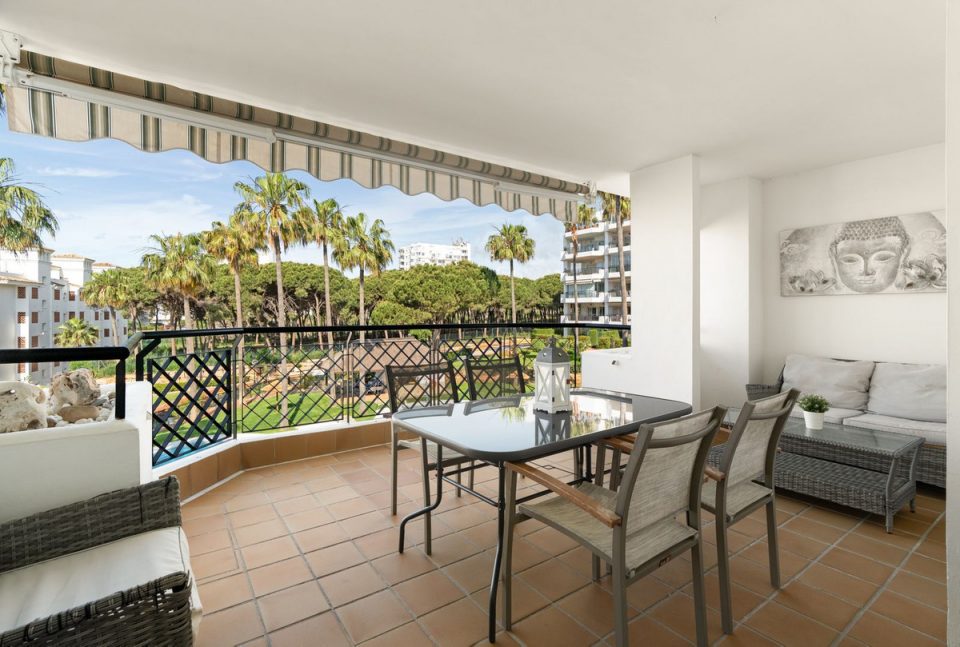
5. Verify Parking and Storage Rights
Parking can become particularly important during the busy summer months, especially in communities with limited private spaces. Do not assume that an advertised parking space automatically belongs to the apartment as a separately registered property.
Your lawyer should establish whether parking and storage are legally attached to the dwelling, held under separate registered titles or provided through rights of exclusive use over communal areas.
Where relevant, compare the title deed and registry information with the space identified during the viewing and any community plans.
Parking and Storage Checklist
- Confirm the specific parking space and its legal basis.
- Check whether a separate Land Registry reference exists.
- Verify the space number against community records where available.
- Inspect the actual parking space, access ramp and turning area.
- Measure the space if you own a large vehicle.
- Confirm whether any storage room is included in the purchase.
- Check whether an electric-vehicle charging installation is authorised and documented.
Older underground garages can sometimes have narrow entrances or difficult turning areas. A space may technically be included but prove inconvenient for your vehicle.
Make sure the final contract accurately records all parking, storage and other rights included in the sale.
6. Visit Calahonda During Different Seasons
The character of a coastal urbanisation can change significantly between winter and the summer holiday period.
In July and August, parking areas may be busier, swimming pools more heavily used and nearby restaurants or entertainment venues noisier. A quiet viewing outside peak season may not reveal these conditions.
On the other hand, winter visits help buyers assess the availability of services, the amount of natural light, heating requirements and the level of year-round residential activity.
If you are seriously considering an apartment, return at a different time of day. Check the property's orientation, traffic noise, neighbouring balconies and the atmosphere around the communal pool.
7. Check Tourist Rental Rules Before Assuming Rental Income
Many international buyers consider renting their Calahonda apartment when they are not using it. However, being located in a popular holiday destination does not automatically make an apartment eligible for tourist letting.
Before building a financial forecast, check the current community rules, the municipal planning position and the applicable Andalusian tourist-accommodation requirements.
Spain's Horizontal Property Law contains approval provisions relevant to new tourist rental activities, while Andalucía requires qualifying tourist accommodation to meet its registration and operational rules.
A property may also be unsuitable for your intended rental strategy because of community restrictions, planning conditions or other legal requirements.
The Junta de Andalucía's official tourist accommodation guidance explains the regional registration framework.
Do not rely on general rental-yield promises. Any projection should consider permitted use, achievable rental income, management expenses, maintenance, cleaning, utilities, taxes and periods without bookings.
8. Test the Real Walking Distance to the Beach
"Close to the beach" can mean very different things in Calahonda. Some apartments are within a relatively easy walk of shops and the seafront, while others are located higher up the hillside.
When comparing homes, check the actual pedestrian route rather than the straight-line distance on a property map.
Look at gradients, pavement conditions, road crossings, parking access and the availability of public transport. A short downhill walk may feel considerably less convenient on the return journey during the summer.
For permanent residents, also investigate access to supermarkets, healthcare, restaurants and everyday services. Buyers intending to work remotely should confirm the availability and reliability of internet connectivity at the exact address.
9. Review Energy Efficiency and Renovation Costs
Energy performance matters because an apartment's comfort and electricity costs depend partly on insulation, glazing and heating or cooling equipment.
Ask for the current energy performance certificate and check whether the property has double-glazed windows, modern air conditioning and appropriate insulation.
An older apartment may offer good value, but the purchase budget should allow for necessary improvements. Obtain quotations for major work rather than assuming that repainting or replacing furniture will address every issue.
Before renovating, establish which changes require community permission or planning approval. Work affecting external walls, terraces, structural elements or communal services deserves particular attention.

10. Compare the Full Annual Cost of Ownership
When two apartments are similarly priced, their ongoing costs can be an important deciding factor.
Community charges, IBI, rubbish collection, insurance, utilities, repairs and any applicable non-resident taxes all affect the annual budget.
For an illustrative two-bedroom apartment, consider the following planning figures:
| Expense | Illustrative Annual Budget |
|---|---|
| Community charges | €1,440 |
| IBI and rubbish charges | €600 |
| Private insurance | €300 |
| Electricity and water | €1,200 |
| Maintenance allowance | €600 |
| Illustrative total | €4,140 |
This example excludes mortgage payments, rental-management costs, internet and tax obligations that depend on the owner's circumstances. It is not a quotation for an identified property.
For a more detailed understanding of community costs in this area, see Martin Real Estate's Calahonda community guide.
Red Flags and Positive Signs Before Buying
| Warning Sign | Positive Sign |
|---|---|
| Unexplained community arrears | Clear accounts and an effective debt recovery process |
| Major works discussed without costs | Documented repair plans and funding arrangements |
| Alterations with no supporting documents | Legal and technical records available for review |
| Parking described vaguely | Parking rights clearly identified and verified |
| Tourist rental income promised without checks | Rental suitability assessed against applicable rules |
| Pressure to pay a non-refundable deposit immediately | Time allowed for independent legal advice |
How Martin Real Estate Can Help You Compare Calahonda Apartments
Finding the right apartment involves more than choosing attractive photographs. The best shortlist takes account of location, budget, community quality, accessibility and how you intend to use the property.
Martin Real Estate provides local buyer information covering Calahonda, Mijas and the wider Costa del Sol. Its Mijas property guide by budget and lifestyle is useful if you are comparing Calahonda with La Cala de Mijas or Riviera del Sol.
The agency's 25-question property viewing checklist also provides a broader framework for evaluating individual homes.
Looking for an apartment in Calahonda? Contact Martin Real Estate with your budget, preferred location and intended use. You can also call +34 951 431 815 to discuss current properties and arrange viewings.
Frequently Asked Questions
Can I Rent Out My Calahonda Apartment?
Possibly, but tourist letting depends on the property's specific legal and planning position, the applicable community arrangements and Andalusian registration requirements. You should verify these before purchasing rather than assume that all apartments in Calahonda can be used for holiday rentals. An independent lawyer can help determine whether the property fits your intended rental plans.
What Happens if the Previous Owner Has Unpaid Community Fees?
Under Spanish Horizontal Property Law, an apartment can be legally affected by outstanding community charges attributable to the current year and the three preceding calendar years, within the statutory limits. The conveyancing process should address the seller's payment status through the appropriate certification and contractual arrangements. Ask your lawyer to investigate and explain any outstanding balance before completion.
Do I Need a Spanish Bank Account?
A Spanish account can be convenient, but it is not automatically compulsory for every payment. Eligible SEPA accounts can generally be used for euro direct debits, although provider procedures may differ. Check the payment requirements of the community administrator, utility suppliers and relevant tax authorities, and consider any foreign exchange or banking charges.
How Long Does Buying an Apartment in Calahonda Take?
The transaction timetable depends on financing, the property's legal situation, documentation and the agreed completion date. A straightforward purchase may progress within a matter of weeks, while mortgage approval, inheritance issues, unregistered alterations or community disputes can require additional time. Ask your lawyer to agree a realistic timetable and explain any deadlines before signing.
Should I Obtain an Independent Property Survey?
An independent technical inspection is particularly useful for older apartments, homes showing evidence of damp or structural concerns, or buildings where major community repairs are being considered. A mortgage valuation is not necessarily a comprehensive condition survey. A qualified professional can identify issues requiring further investigation and help buyers estimate refurbishment costs.
How Can I Check Whether My Parking Space Is Included?
Ask your lawyer to examine the title documentation, registry entries and any relevant community arrangements. Parking can be held under different legal structures, so it is important to establish precisely which space or usage right is being transferred. The space should also be inspected physically to confirm that it is accessible and suitable for your vehicle.
Are Older Calahonda Apartments Worth Buying?
Older properties can offer established surroundings, mature communal gardens and layouts that suit some buyers. However, the condition of the individual apartment and the wider building is more important than age alone. Review technical records, community finances, planned works and renovation costs before deciding whether the asking price represents good value.
When Is the Best Time to View Apartments in Calahonda?
There is no single best month. Summer viewings can reveal parking pressure, pool usage and holiday-season noise, while winter visits offer insight into year-round services, daylight and the community's quieter periods. If possible, revisit a preferred property at another time of day and compare the conditions with how you expect to use it.
Find the Right Calahonda Apartment with Martin Real Estate
Buying an apartment in Calahonda can be an excellent lifestyle decision, but the strongest purchase is one supported by clear legal documentation, realistic running costs and a well-understood community.
Before making an offer, investigate the property and the development together. Check the community accounts, request the legal documents, inspect the building, verify parking rights and confirm whether the home supports your intended use.
Browse Calahonda properties currently for sale or explore the wider Mijas property market to compare alternatives.
Ready to arrange viewings? Speak with Martin Real Estate or call +34 951 431 815 to discuss your Calahonda property search.
Always obtain independent legal and technical advice before entering a binding property purchase agreement.


