
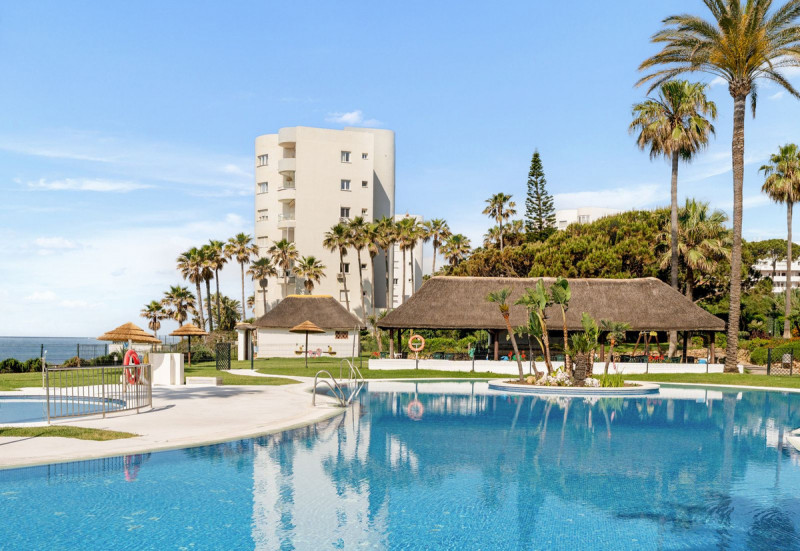
Calahonda stretches along the Costa del Sol between Mijas Costa and Fuengirola, a collection of urbanisations rather than a single town. This structure matters when buying an apartment here, because each community sets its own fees, maintains different amenities and operates under separate administrations. Understanding these distinctions before you commit can save thousands of euros and significant frustration. For a broader introduction to its beaches, amenities and residential character, read the Calahonda area guide.
Most buyers focus on the apartment itself. The smarter approach examines the community first, then the property. Community fees fund everything from garden maintenance to security, and a poorly run urbanisation will erode your investment no matter how attractive the apartment. When you are ready to compare available homes, browse current Calahonda properties for sale.
Understanding Calahonda's Urbanisation Structure
Calahonda comprises around 30 separate urbanisations, each functioning as an independent community. You are not buying into "Calahonda" as a whole but into a specific development with its own rules, budget and management company.
The largest and most established urbanisations include Sitio de Calahonda, Jarales, Riviera del Sol and El Chaparral. Smaller developments dot the hillside between the coastal road and the A7 motorway. Altitude matters here: properties closer to the beach command higher prices but often face steeper community fees due to premium facilities and higher maintenance costs in coastal zones.
Each urbanisation operates through a community of owners (comunidad de propietarios), governed by Spanish horizontal property law. All apartment owners become automatic members, paying quarterly or annual fees and holding voting rights at annual general meetings. The community elects a president and administrator who handle day-to-day operations and major decisions.
Community Fees: What to Expect When Buying

Community fees in Calahonda typically range from €600 to €2,500 per year for a two-bedroom apartment, though larger properties in premium developments can exceed €3,500 annually. The variation depends on five main factors: the size of your property, the number of units sharing costs, the facilities provided, the age of the development and how well previous committees managed budgets.
Smaller developments with fewer apartments split maintenance costs among fewer owners, often resulting in higher individual contributions. A 30-unit complex will charge each owner more than a 200-unit urbanisation for comparable services, simply because the denominator is smaller.
Beachfront communities with pools, gyms, tennis courts and 24-hour security sit at the upper end of the fee spectrum. Hillside developments with minimal shared facilities and no lifts charge considerably less. One of Calahonda's appeals is this range: you can choose between full-service resort-style living or simpler, lower-cost communities.
Age plays a role too. Newer developments often set artificially low fees initially to attract buyers, then raise them sharply once reserves run low. Older urbanisations may face special assessments for major works like façade repairs, pool renovations or lift replacements. Always request the community's financial statements for the past three years and check the reserve fund balance before making an offer.
Calahonda Urbanisations: Fee Ranges and Amenities Compared
| Urbanisation | Typical 2-Bed Fee Range (Annual) | Key Amenities | Approx. Beach Distance | Resident Profile |
|---|---|---|---|---|
| Sitio de Calahonda | €1,400 - €2,200 | Multiple pools, gardens, some with gyms, 24hr security in premium phases | 200m - 600m | Mixed international, high proportion of permanent residents, strong British community |
| Jarales | €900 - €1,500 | Communal pools, landscaped gardens, tennis courts | 1.5km - 2km | Majority year-round residents, family-oriented, mixed European nationalities |
| Riviera del Sol | €1,200 - €2,000 | Pools, padel courts, gardens, some gated with security | 400m - 800m | Holiday homes and retirees, strong Scandinavian presence, golf-oriented |
| El Chaparral | €1,100 - €1,800 | Pools, golf course access, landscaped grounds | 600m - 1km | Golf enthusiasts, mixed permanent and seasonal, quieter demographic |
| Los Hidalgos | €800 - €1,300 | Shared pools, basic gardens, parking | 2km - 2.5km | Permanent residents, budget-conscious, Spanish and British mix |
| Mijas Golf (Los Olivos) | €700 - €1,100 | Pool, minimal landscaping, mountain views | 4km - 5km | Golf access priority, retirees, lower density, car-dependent |
| Calahonda Park | €1,000 - €1,600 | Pool, gardens, playground, secure entry | 1km - 1.5km | Family-focused, mix of permanent and holiday lettings |
| Calypso (beachfront) | €1,800 - €2,800 | Multiple pools, direct beach access, concierge in some blocks, gyms | 50m - 200m | High-end holidaymakers and retirees, international, premium services |
This table anchors fee expectations to real developments. When viewing properties, confirm current fees directly with the administrator, as individual apartments within the same urbanisation may have different quotas based on size and position.
Best Areas and Urbanisations in Calahonda

The lower coastal strip, particularly Sitio de Calahonda and the developments immediately west toward Riviera del Sol, offers the best beach access and the most established infrastructure. Restaurants, supermarkets and services concentrate here. Properties in these zones hold value well but expect community fees at the higher end of the range.
Mid-level urbanisations between the coastal road and the A7 motorway provide a practical middle ground. You gain hill views, lower fees and quieter surroundings while remaining within a five to ten-minute drive of beaches and amenities. Jarales and Los Hidalgos fall into this category, popular with year-round residents rather than purely holiday buyers.
The upper developments toward Mijas Golf trade coastal proximity for mountain views, golf access and significantly lower prices. Community fees here tend to sit below €1,000 annually for standard apartments. These areas suit buyers prioritising space and tranquillity over beach lifestyle, though you will need a car for all daily tasks.
When comparing areas, consider the nationality mix. Some urbanisations lean heavily British, others Scandinavian or Spanish. This affects everything from AGM language to social activities and can influence how easily you integrate if you plan to live here full-time.
What Community Fees Cover in Calahonda
Understanding exactly what your monthly or quarterly payment includes helps you budget accurately and spot communities that offer poor value. Spanish horizontal property law mandates certain expenditures while allowing communities to vote on optional services.
Standard Inclusions
Standard community fees typically cover garden and communal area maintenance, swimming pool cleaning and chemicals, buildings insurance for shared structures, exterior painting and repairs, rubbish collection from communal bins, shared water for gardens and pools, electricity for common areas and lifts, and the administrator's management fee. These elements appear in virtually every Calahonda urbanisation and form the baseline of what you should expect.
Maintenance quality varies considerably. Walk the grounds during your viewing to assess whether gardening, pool condition and general upkeep justify the fee level.
Premium Add-Ons
Higher-fee developments add services like on-site staff, security patrols, gym and sauna maintenance, tennis or padel court upkeep, and more frequent cleaning schedules. Some beachfront communities include concierge services, doormen or reserved parking management. A few premium urbanisations provide WiFi in communal areas, satellite television infrastructure or even organised social activities funded through the community budget.
Evaluate whether you will actually use these amenities. Paying €2,000 annually for a gym you never visit makes little sense when a commercial gym membership costs €300. Similarly, 24-hour manned security sounds appealing but adds €400 to €800 per apartment annually. If the urbanisation sits in a low-crime area with gated access, the value proposition weakens.
What You Pay Separately
Community fees do not cover your individual utility bills, your apartment's interior insurance (buildings insurance covers only the shell and shared elements), individual property tax (IBI), or any special assessments voted by the community for extraordinary works.
You remain responsible for all services consumed within your apartment: electricity, water beyond the community supply, internet and telephone. Buildings insurance protects the structure but you need separate contents and liability cover for your interior.
Some communities include reserve funds in the standard fee, others levy them separately. A healthy community maintains reserves equal to at least one year's operating budget to cover unexpected repairs without emergency levies. Check this figure in the community accounts.
Total Annual Cost: A Worked Example
Abstract fee discussions rarely help buyers plan budgets. The table below shows realistic annual costs for a two-bedroom apartment in a mid-tier Calahonda urbanisation in 2026:
| Expense Category | Annual Cost |
|---|---|
| Community Fee | €1,200 |
| Property Tax (IBI) | €450 |
| Buildings Insurance (external structure, through community) | €180 |
| Contents & Liability Insurance (your policy) | €200 |
| Utilities (electricity, water, if occupied 6 months) | €900 |
| Total Fixed Annual Costs | €2,930 |
This example excludes mortgage payments, rental management fees if you let the property, or non-resident tax if you live outside Spain. If the community votes a special assessment for roof repairs or lift replacement, add that one-time cost to the year it occurs. Martin Real Estate's Costa del Sol property buying guide explains how these ongoing costs fit alongside taxes, legal fees and the wider purchase budget.
For a beachfront premium apartment with higher fees and year-round occupancy, the same calculation might total €5,500 to €6,000 annually. The difference between mid-tier and premium communities often equals the cost of several return flights or a significant portion of annual rental income.
Additional Costs Beyond Community Fees

Property tax (IBI) in Calahonda ranges from €300 to €900 annually depending on cadastral value. Non-resident owners also pay annual non-resident income tax (IRNR) calculated on imputed rental income, typically €200 to €500 for a standard apartment. For a fuller explanation of acquisition taxes and professional charges, see the guide to fees, taxes and property costs in Spain.
If you let the property, factor in utility bills (averaging €100 to €150 monthly if occupied), property management fees (typically 10 to 15 percent of rental income plus VAT), and cleaning between guests (€60 to €100 per turnover). Rental licensing requirements in Andalusia add registration costs and compliance obligations.
Total annual holding costs for a two-bedroom Calahonda apartment typically run between €3,000 and €6,000 before any mortgage payments, depending on which urbanisation you choose and whether you rent it out.
Due Diligence Before You Buy
Requesting paperwork separates informed buyers from those who discover problems after completion. Ask your lawyer or agent to obtain the community's financial statements for the past three years, minutes from the last three annual general meetings, a certificate of debts (certificado de deudas) confirming the current owner has paid all fees and assessments, details of any ongoing or planned major works, and confirmation of the reserve fund balance. The guide to using an independent lawyer when buying property in Spain explains the wider legal checks your representative should complete.
Community accounts reveal spending patterns. Look for consistently rising fees without corresponding improvements, expenditure significantly above or below budget (both signal poor planning), or large debts owed by multiple owners. If several apartments have arrears, the community may struggle to fund routine maintenance and you could face higher fees or special assessments to cover shortfalls.
AGM minutes provide narrative context the accounts cannot. Frequent complaints about the same issue suggest unresolved problems. Disputes between owners, votes to replace the administrator, or mentions of legal action all warrant further investigation. Minutes also disclose upcoming projects: if the community voted to replace the pool filtration system at a cost of €800 per apartment, you need to know that before agreeing a price.
The certificate of debts protects you from inheriting the previous owner's unpaid fees. Under Spanish law, debts follow the property, not the person. If the seller owes €2,000 in community fees, you become liable for that amount after purchase unless your contract includes specific protections. Insist on seeing a zero-debt certificate dated within two weeks of completion.
Ask about planned assessments even if nothing appears in recent minutes. Older buildings often need major works every 10 to 15 years: façade painting, waterproofing, lift modernisation, pool resurfacing or underground parking repairs. A committee may be discussing these projects informally before putting them to a vote. Your lawyer should ask the administrator directly whether any significant works are under consideration.
Verify the community holds valid buildings insurance with adequate coverage. Request a copy of the policy schedule and check the sum insured covers full rebuilding costs at current construction prices, not the purchase price from 20 years ago. Underinsurance leaves all owners exposed if fire or structural failure occurs.
Why Community Quality Matters More Than the Apartment
A well-maintained community protects your investment. Properties in urbanisations with manicured gardens, clean pools and prompt repairs hold value better and attract tenants or future buyers more easily than identical apartments in neglected developments.
Poor community management creates a downward spiral. If owners see fees wasted or facilities deteriorating, they stop paying. Arrears rise, services decline further, and engaged owners either sell at a loss or face ever-larger levies to compensate for defaulters. Reversing this trajectory requires years of determined committee work and often legal action to recover debts.
The community also determines your living experience. Neighbours who treat their apartment purely as a short-term rental investment may prioritise low fees over quality, vote down improvements and ignore rules. Communities with high owner-occupancy rates tend to maintain standards better because residents live with the consequences of their decisions daily.
Check the ownership split before buying. A development where 70 percent of apartments serve as holiday lets will feel, function and vote differently from one where 70 percent of owners live there permanently. Neither is inherently better, but the mismatch between your expectations and the community's character causes problems.
Ready to compare communities and apartments? Browse Calahonda properties for sale or contact Martin Real Estate for local buyer support. You can also call +34 951 431 815 to discuss your preferred area, budget and intended use.
Frequently Asked Questions
How often do community fees increase in Calahonda?
Most Calahonda communities review fees annually at the AGM, typically held in the first quarter. Increases usually track inflation, averaging 2 to 4 percent per year in well-managed urbanisations. Larger jumps of 10 to 20 percent often signal previous underfunding, deferred maintenance or new services. Spanish horizontal property law requires fee increases above a certain threshold to receive majority approval from owners. Review several years of AGM minutes to identify the community's fee trajectory before buying.
What happens if the previous owner has unpaid fees?
Unpaid community fees attach to the property, not the individual owner. When you complete the purchase, you inherit any outstanding debts unless your contract explicitly protects you. Always request a certificate of debts (certificado de deudas) from the community administrator dated within two weeks of completion, and make payment of all arrears a condition of the sale. Your lawyer should retain funds from the purchase price to settle any debts before releasing money to the seller. The community has legal priority over your mortgage lender for these debts and can pursue recovery through property liens.
Can I see the community budget before buying?
Yes, and you should insist on it. Spanish law grants all owners (and prospective buyers acting through their legal representative) the right to inspect community accounts, budgets and AGM minutes. Ask your lawyer to request the past three years of approved budgets, actual expenditure accounts and the current year's budget. This information must be provided within a reasonable timeframe. If the administrator or seller refuses access, treat it as a red flag and reconsider the purchase.
Do I have to attend AGMs?
Attendance is not legally mandatory, but you hold voting rights and can influence decisions on fees, major works and rule changes. If you cannot attend in person, you may appoint a proxy (often your lawyer, property manager or a trusted neighbour) to vote on your behalf. Communities require a quorum to pass certain decisions, and chronic non-attendance can paralyse governance. Engaged communities with high AGM participation generally maintain higher standards than those where most owners ignore meetings and a small clique makes all decisions.
Are community fees tax-deductible if I rent the apartment?
Yes, if you declare rental income in Spain, community fees qualify as a deductible expense against that income. You can also deduct IBI, insurance, utility costs, management fees, repairs and a portion of mortgage interest. If you rent the property as a holiday let, you must register with the Andalusian tourism authority and meet licensing requirements. Non-resident landlords pay tax on net rental income at 19 percent for EU residents or 24 percent for non-EU residents. Keep all invoices and community fee receipts to substantiate deductions if the tax authority requests evidence.